

Proof of Life
when the hard thing happens

Last week, my mother completed her “casualty loss inventory,” a harrowing months-long process required for tax purposes that involved cataloging every item in our home that burned in last year’s Palisades Fire. For months, she’d been calling me to report what objects she’d remembered that day, what in particular had tugged upon her. Sometimes she sobbed. More rarely, she expressed glimmers of hope. This will be over soon, she said, and I will be able to start my life again. Each day, she sent old snapshots she’d stumbled upon while combing through her photo library for images of disappeared rooms, artwork, furniture: “proof,” as it were.
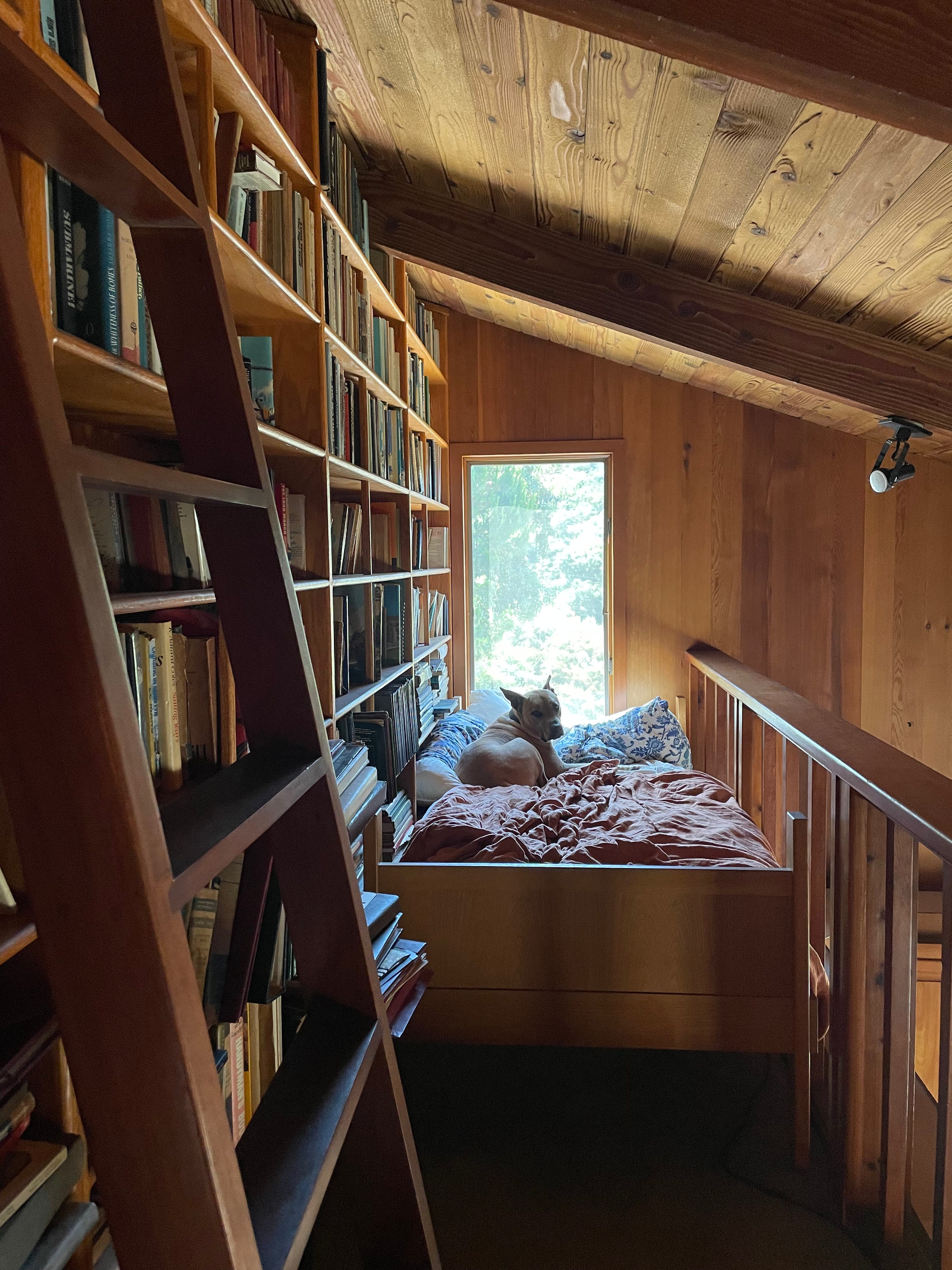
They gutted me, these missives from another life: the one we’d had before. Looking at photos from before had taken on a bittersweet tinge after my father’s bicycle accident and traumatic brain injury in 2008, and then again after his death from pneumonia in 2013, but now everything was gone—the rooms he’d existed in, the clothes he’d worn, the books he’d touched, the art he’d loved. His cameras, his violin, his ship’s models, every last photograph and relic. The contraption he’d built to hang his beloved copper pots and cast-iron pans from the vaulted wooden ceiling above our kitchen island. The twin bed wedged up against a window in the lofted library nook—Cozy Corner, he called it—where he was exiled when he snored.
Here, on my phone screen, was a photo my mother had sent from my college graduation in 2012, a year before my father died. In it, my best friend and I grasped each other, grinning, impossibly bright-eyed and pink-cheeked in our garish purple robes. She has a child now, I thought, of my friend, and that fact—in combination with the one that we had somehow once been twenty-two—felt dizzying; beyond belief. I remembered parts of that afternoon so clearly: the Kelly green silk dress I’d worn, how our polyester robes had amplified the humid fug of June in New York City, the weighty handfeel of my gold Honors tassel. The theatre where the ceremony took place was on the Upper West Side, just a few blocks from the now-shuttered Lincoln Plaza Cinemas, a place my father and I had loved. He had been there, at my graduation, slumped in his wheelchair, blue eyes unfocused—the first and last air travel he would undertake during the years of his brain injury. Beneath the smile in the photo, I’d been reeling.
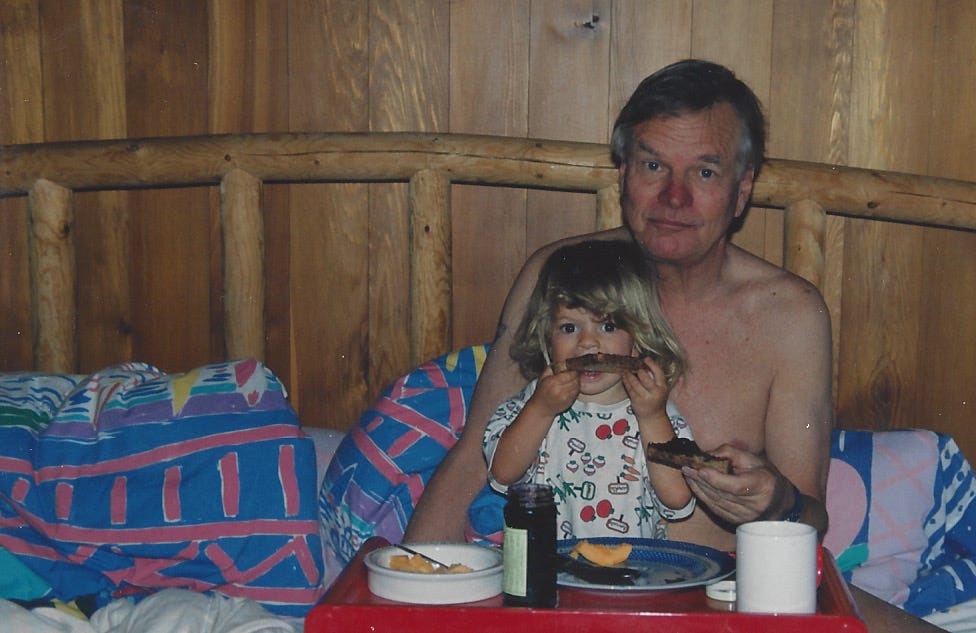
Here I was at two and a half years old, a weekend morning, breakfast in bed with my father in my parents’ bedroom. That lodgepole pine bedframe—I’d loved to climb it, bare feet grasping sanded pine, and leap from it onto their bed with its Memphis-style geometric-print bedding, an early-‘90s riot of turquoise, magenta, and lavender. The red plastic breakfast tray; the blue-and-white Spode china dish, an heirloom from my paternal grandmother. A wedge of canteloupe. Toast slathered with butter and my father’s favorite St. Dalfour raspberry jam. In the photo I am sitting in his lap, munching my toast, my white cotton pajama top printed with colorful cartoon illustrations of tomatoes, carrots, and radishes. The bangs I’d cut myself that year are pushed to one side. I’d felt safe with my father, protected. I could see that security in this photo and the others my mother sent.
It’s been a year and change since the Palisades Fire took my childhood home, where my mother still lived. A year and change, too, since I’ve written “for myself” (I don’t count journalism here—while that form does genuinely light me up, it scratches an entirely different itch). In 2025 I read less books than ever before, journaled less than ever before. This can be partially attributed to the demands of my editorial duties for The Panafold as we built that publication from the ground up—I’ve been haltingly working towards finding a balance between it and my own creative projects—but there is something deeper at play. I have avoided writing as a form of self-protection. I have not wanted to look in depth at what I’ve known I needed to. I have not wanted to feel the bottomless depth of my grief, have not wanted to dive—again—into the before.
Losing my father was one of my worst fears for as long as I could remember: a gnawing dread that plagued me as a child, no doubt in part because of his advanced age. I remember praying that he would at least live until I turned eighteen. When it happened, sooner than I’d expected (I turned eighteen one month before his accident, when he was eighty-one), there was a strange, thorny sense of—what was it? Relief? The worst fear, the hard thing, had happened. Now I didn’t have to worry about it happening anymore. I recognized a shadow of that same feeling when the phone call came confirming that our home was gone. I was standing in the parking lot outside my gynecologist’s office, and I crumpled to the sunwarmed asphalt. Another hard thing, another worst fear. All physical proof of our life with my father erased.
I logged onto Substack today to delete this page. I’d launched it one year ago, then proceeded… never to post. Remember when I thought I had time for a Substack? I joked to friends, throughout the year. Behind my flippancy was a thread of shame. I may at times move slowly, but I am not a person who starts projects and neglects to finish them. I would rid myself of the evidence of this failed attempt, I thought. Then I read my first post from one year ago, written from a moment in time when I felt my skin had been flayed from my body. I looked at the beautiful logo my friend Briana Hess designed for me; the flower she drew me by hand. I felt a glimmer of possibility, something similar to what I imagine my mother feels at times when she catches a glimpse of the life she might reclaim when all this is over. I started to write.
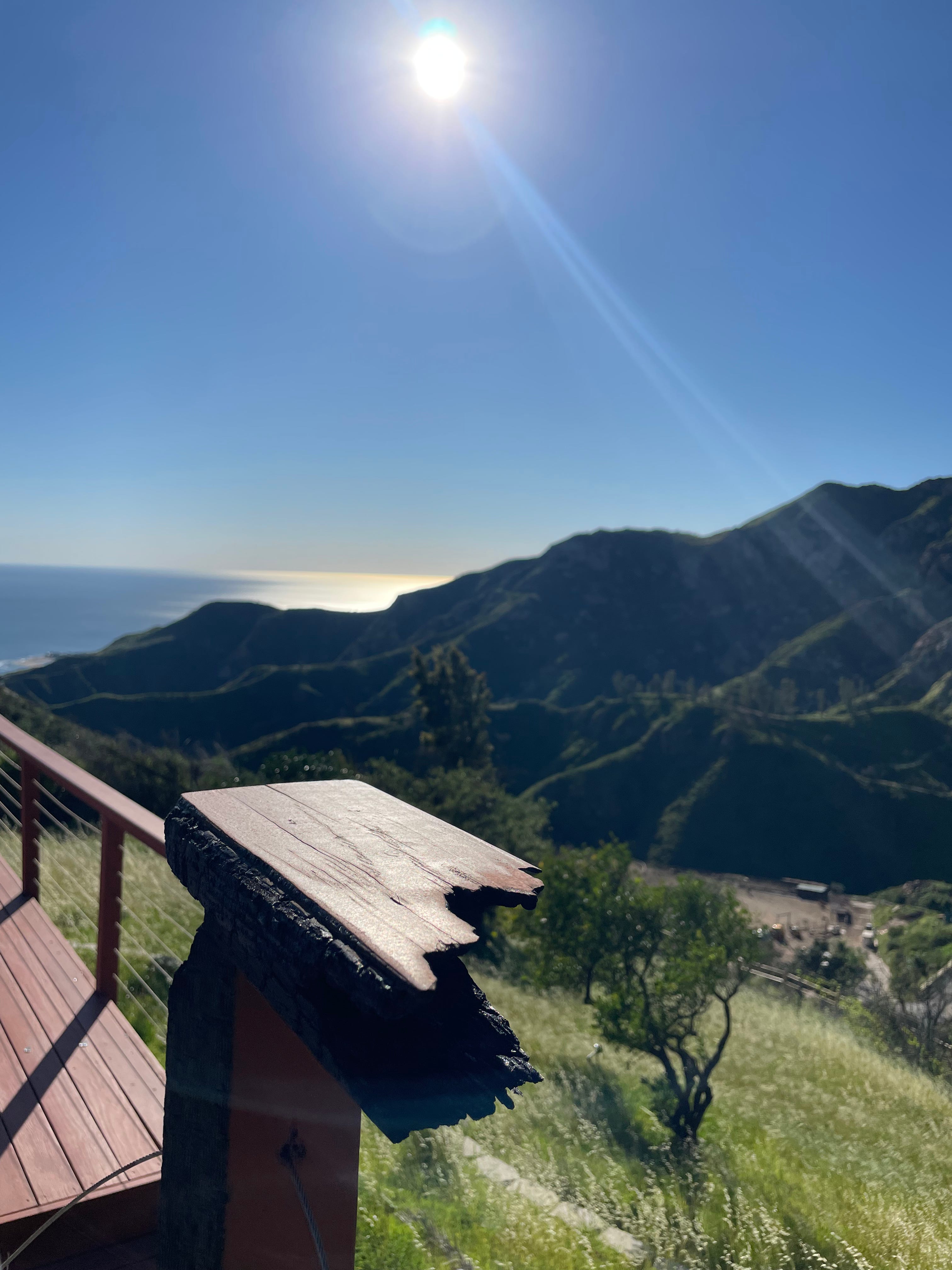
On a Sunday afternoon in early March, I found myself on the West Side and decided to visit our property. It was perhaps the fourth or fifth time I’d done so since the fires. Driving alone up our winding canyon road—a road I’d learned to drive on at fifteen, a road I knew as well as my own body—felt both familiar and eerie, its logic off-kilter like that of a dream. I passed the empty lots where neighbors’ homes had been, took in the For Sale signs. I pulled into our driveway, passing the place where my father had fallen off his bicycle all those years ago. Weeds snaked up through cracks in the pavement. There was the Pacific in the distance, flat and silver, like always. A smattering of purple flowers on the hillside. Eucalyptus branches stirred. There was a current of warm wind, the kind of wind that would’ve frightened me if I’d had a home to protect.
Our redwood deck had been repaired and treated with fire retardant in the months before the fires, and it had stayed miraculously intact. If I stood in a certain place on that deck, the absence of our home behind me, it was almost as if nothing had changed.
Beautifully written, Annabel.
Love this Annabel ❤️